Sturdy Royal Icing For Gingerbread Houses
This sturdy royal icing is made from meringue powder , powdered sugar, and just enough water to make a strong gingerbread house.
| Taste | Texture | ||
| Sugar! | Thick, creamy |
| Active time | Total time | Yield | Difficulty |
| 5 minutes | 2 hours for drying | 1 pound | Easy |

After years of making gingerbread houses on my own and with my students, I’ve learned that royal icing can be a help or a hindrance to your building process. The runnier your icing is, the longer it will take to set up. The longer it takes for pieces to dry, the longer it takes to build your gingerbread house, which can lead to a lot of wasted time and the potential for houses to collapse.
Because I want you to not be intimidated by building your own gingerbread house and because I want you to be successful in doing so, this recipe is for the perfect sturdy royal icing that has just the right amount of water.
After you’ve made your pieces with my gingerbread house recipe, you’ll need a batch of this icing to be able to make your gingerbread house. Let’s mix!

What Is Royal Icing?
Royal icing is a pure white icing that dries hard made from egg whites, powdered sugar, and water. A little bit of lemon juice also helps the fluffiness of the frosting, but not every recipe uses it.
Royal icing can be thick enough to serve as mortar that holds pieces of gingerbread houses together, or it can be thin “flood” icing to decorate sugar cookies. It’s important to use the right consistency of icing for the job you’re trying to do. Trying to glue your house together with thin drippy icing will end in tears just like you wouldn’t use kids’ glue to repair a broken teacup handle.
Why You Need Thick Royal Icing for Building Gingerbread
- Structural integrity: Royal icing is the mortar that holds a gingerbread house together. I know there’s people who cheat and use a glue gun, and as much as I love my glue gun, it’s the wrong way to build a gingerbread house. Following Mary Berry’s philosophy that everything on a board should be edible, all you need is strong royal icing to hold things together.
- Faster building: While you will still need to wait for pieces to dry, this sturdy royal icing will set up quickly enough that you won’t waste all day making your house stand. That gives you more time for making your house look awesome with added candy and decorating around your house.
- It’s easier to thin thick icing: If you want to pipe on decorations, you can still use this same icing, just add a couple drops of water at a time until you like the consistency. It’s much more difficult to thicken up a too-thin icing by adding more powdered sugar or meringue powder .

Ingredients for Gingerbread House Icing
- Powdered sugar
- Water
- Meringue powder : I prefer meringue powder over raw egg white as you never have to worry about the icing being at room temperature. It also allows you to add more strength to the icing from the egg white without adding extra moisture. You can’t change that ratio of egg white to water using whole egg whites alone.
How to Use This Icing


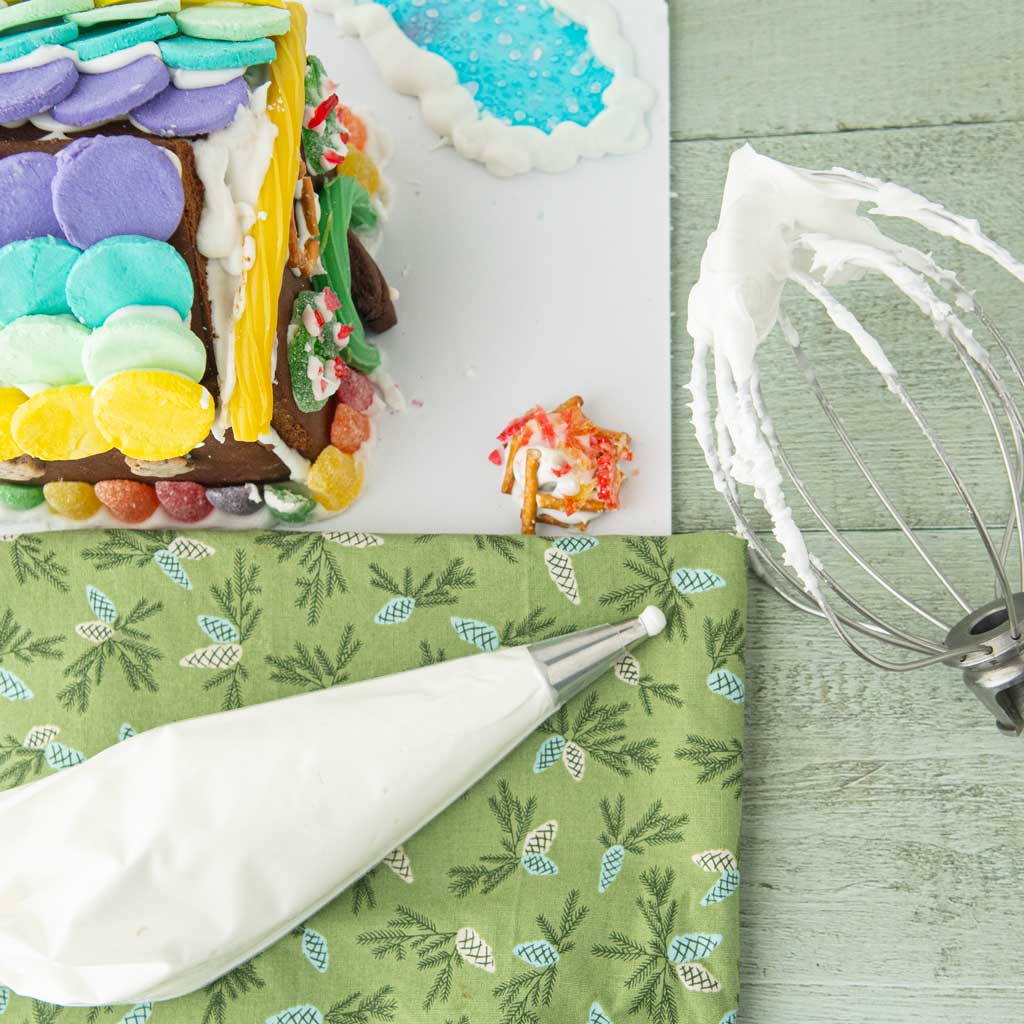
For construction: Once you’ve made up your icing, scrape it into a pastry bag fitted with a plain 1/4″ tip. This size is perfect for a small scale gingerbread house like the one in my gingerbread house recipe.
For decorating: This icing is thick, but it’s perfectly fine for sticking things on to your house as well. To use this icing for piping, add a little more water (see the recipe) to make it easily flow through a smaller 1/8″ plain tip.
For repairs: If things fall off the house or on your board, use the icing to stick things back in place. If the piece came off in a place where the royal icing “mortar” was thick in the first place, you may need to scrape off excess icing first before adding on extra icing to glue the broken off piece.
Pro Tips for Making the Perfect Sturdy Royal Icing
- Use a scale: You know I’m always preaching about using a gram scale , and this is no exception. 2 pounds of powdered sugar is a lot to mix in a stand mixer without getting clumps. 1 pound batches are not only a better scale of recipe, but you’ll get a better smoother icing in the end. If you don’t have a gram scale to weigh out 1 pound (454 g), simply buy a 1 pound box of powdered sugar instead.
- Scrape and then whip: There is very little moisture in this icing by design. To get a clump free icing, add in your water, mix for a few seconds, and then scrape down the sides. After doing this a couple times, the powdered sugar will by hydrated enough that you can whip it into a thick, smooth icing.
- Work in a clean bowl: Whenever egg whites are involved, you must have a clean work bowl and whip attachment. Wash the bowl to remove any traces of oil or butter from previous projects. I actually double wash mine; washing first with a sponge and then by hand with drops of dish soap. I made a batch of this icing with milk just to see if the egg whites would set up the same. Spoilers–they never did. That small amount of fat prevented the egg whites from doing their work!

Sturdy royal icing for gingerbread houses
- Total Time: 2 hours for drying and decorating a whole house
- Yield: 1 pound icing 1x
Description
This icing sets up quickly making for easy to build gingerbread houses that won’t fall apart on you. Follow my gingerbread house recipe for a stress free gingerbread building experience.
Ingredients
- 1 pound powdered sugar (454 g)
- 1 tablespoon meringue powder
- 4–5 tablespoons water
Instructions
Make the icing
- Wash your bowl, beater, and spatula you’ll be using to remove any oils. Dry them with a clean paper towel.
- Mix the powdered sugar and meringue powder in the bowl of a mixer.
- Pour in 3 tablespoons of the water and then turn the mixer on to mix everything just to moisten the sugar.

- Scrape down the sides of the mixer with your clean spatula, focusing on getting the sugar off the sides and bottom of the bowl.
- Turn the mixer back on and mix for a few more seconds. Scrape again.
- At this point, the sugar should be moist enough that you can whip the icing. Add in 1 more tablespoon of the water and scrape one more time.
- Turn the mixer on high and whip the icing. If the icing still seems stiff, dribble in enough of the remaining tablespoon of water for the icing to stop being clumpy.
- Continue to beat the icing until it holds its shape. From here, your icing is ready to use for your gingerbread house. Either place it in piping bags or place a piece of plastic over the bowl on the surface of the icing to keep it from drying out.


Notes
Thinner consistency for piping: Add in 1-2 tablespoons of water to the icing for thinner consistency that’s perfect for piping on designs, writing, or other fine detail work. You can still use this thinner consistency to stick things on your gingerbread house, but they will take longer to dry. It’s best to use this thinner icing for sticking on things that are not on vertical surfaces for this reason or are lightweight.
- Prep Time: 5 minutes
- Cook Time: 0 minutes
- Category: Baking Building Blocks
- Method: Mixer
- Cuisine: European