Homemade Pretzel Buns: Laugenbrötchen with No Lye
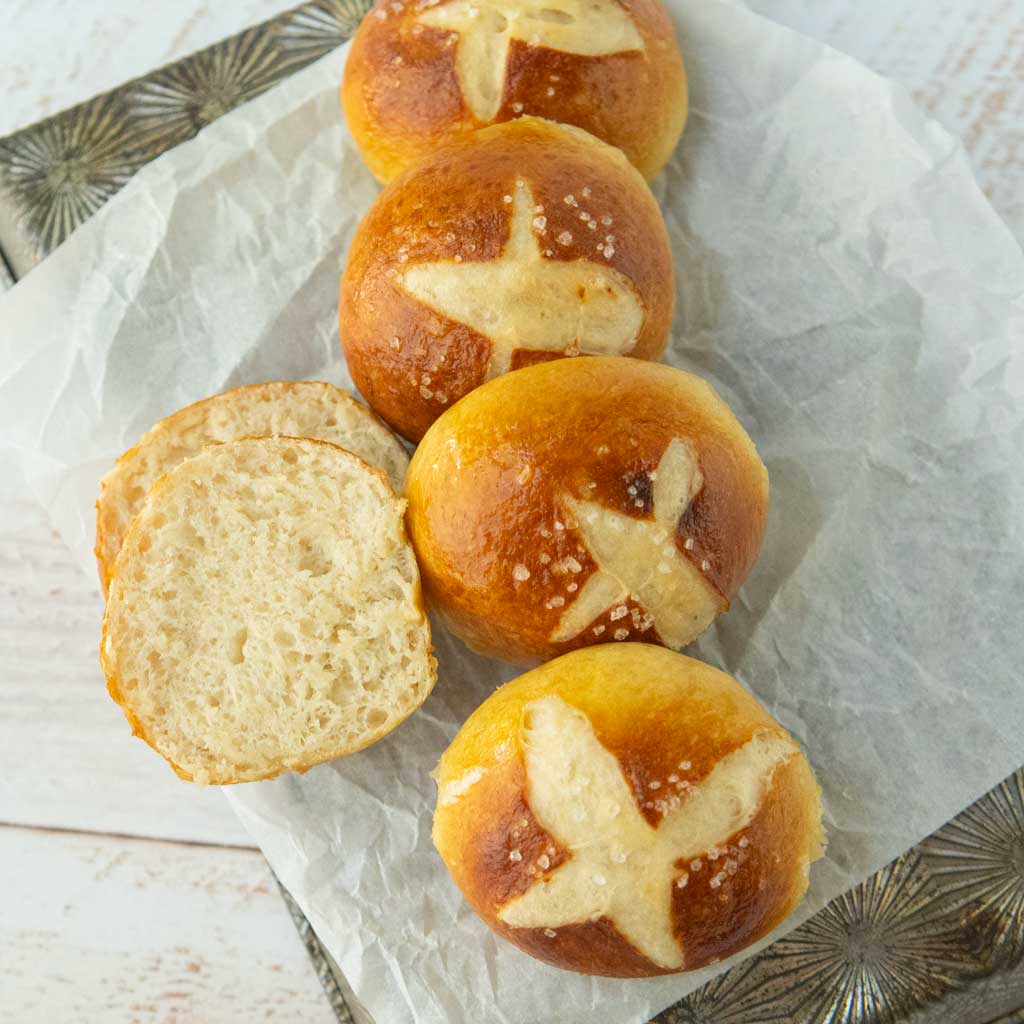
These pretzel buns have burnished chewy outsides and pillowy soft interiors that make for the best slider sandwiches. Shoot, they taste good by themselves with a generous bit of butter. Just like my Homemade Soft Pretzels, these pretzel buns do not use lye in the baking process, keeping your workflow simpler with no worry about safety. This is a sandwich bun you’ll want to know how to bake!
| Taste | Texture | ||
| Salty, yeasty, pretzel | Soft, chewy |
| Active time | Total time | Yield | Difficulty |
| 15 minutes | 2 hours | 16 rolls | Easy |

Pretzel Buns Are:
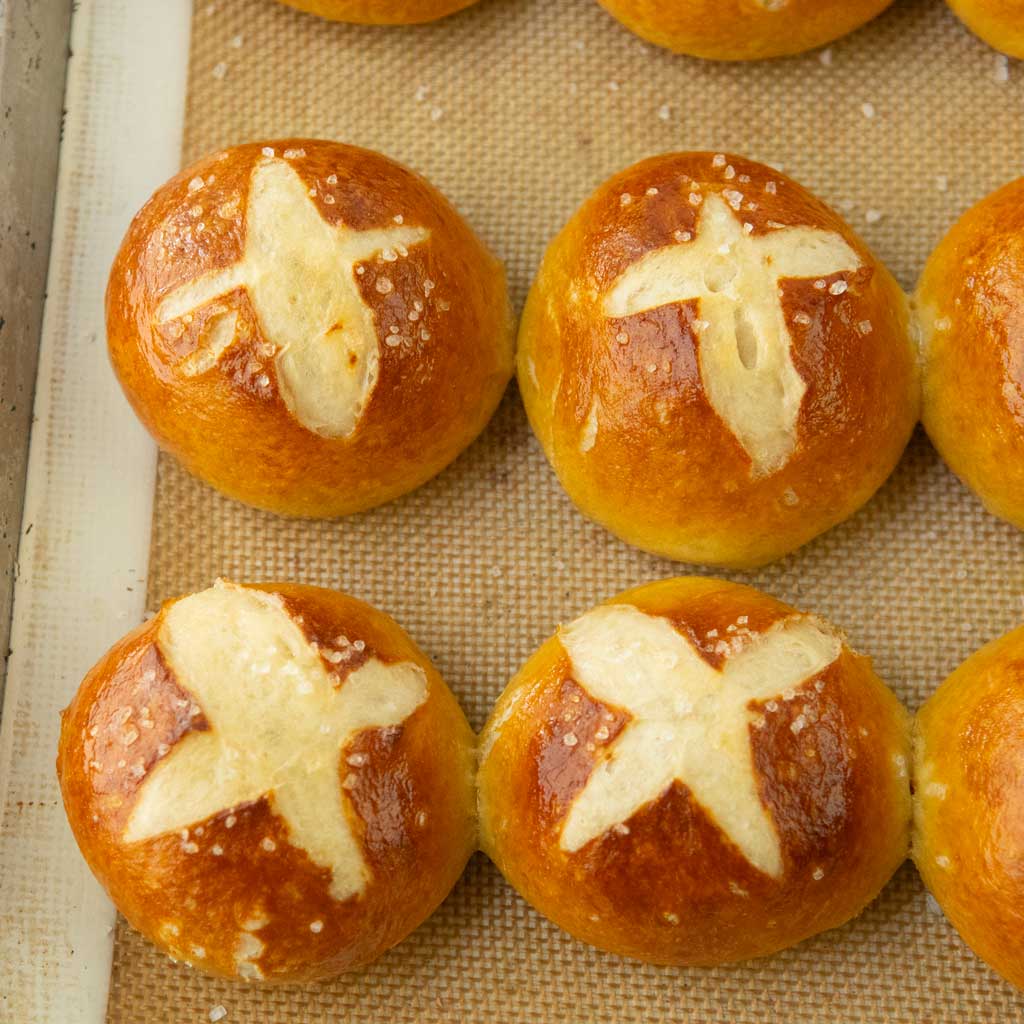
Laugenbrötchen vs. Homemade Pretzel Buns
Laugenbrötchen are the traditional German pretzel buns. Laugenbrötchen literally means “lye roll” because they are dipped in a food grade lye solution before baking. The lye is responsible for giving the buns their characteristic burnished brown outer crust. It does this by reacting to the dough itself, accelerating the Maillard reaction without overbaking the inside of the bun. The sodium hydroxide itself is then neutralized in the baking and turned into harmless sodium carbonate and salt.
These pretzel buns do not use lye for reasons you can read if you’d like in my Soft Pretzels recipe. Instead I use the weaker base of baking soda since we have it in all our kitchens and because it’s not caustic, unlike lye. For home bakers, using baking soda to create the same deep brown crust is much simpler.
My German friend believed it was okay to still call these Laugenbrötchen even if you don’t use lye since the spirit of the chemistry behind the traditional recipe is still there even though we’ve modified it for home use.
Experimenting with Concentrations of Baking Soda Solution
Sharp readers will notice that the percentage of baking soda in the alkaline solution used in this recipe is half the strength than the one in my Soft Pretzels. In my tests, I’ve discovered a couple of things about brushing on solutions vs. boiling dough in the solution. You can try both and see what you like.
- Boiling Seems to Need a Lower Concentration: When boiled, baking soda seems to bond to the surface more strongly. Having now tested both pretzels and pretzel buns with brushing and boiling, boiled ones seem to require less baking soda to produce the same level of browning. My guess is that has to do with a chemical reaction produced by the heat and the surface of the dough.
- Brushing Seems to Need More: If you brush on the same strength alkaline solution (1 tablespoon baking soda per cup of water) used in this recipe for the boiled solution, your pretzels will be much paler and have less of a pretzel taste to them. They’re not bad by any stretch, but the higher strength gives you a better color and better flavor.
When to Brush on Baking Soda Solution vs. When to Boil Breads in the solution
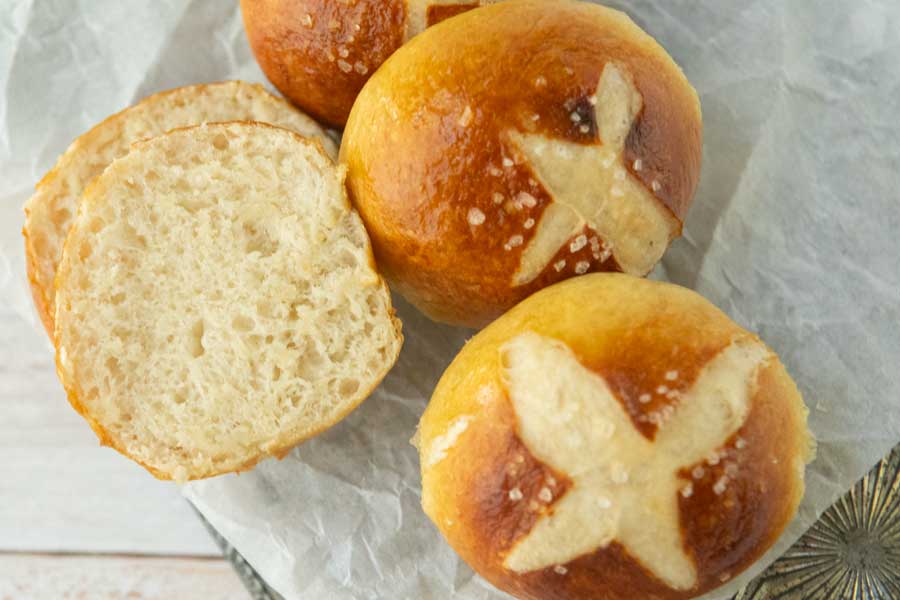
Ingredients for Homemade Pretzel Buns
Pretzel Bun Dough
- Warm water
- Instant yeast
- Granulated sugar
- All-purpose flour
- Salt
- Lard, tallow, or butter: adds flavor and flexibility to the dough.
Alkaline Solution for the Crust + Finishing
- Baking soda
- Boiling water
- Pretzel salt (or kosher salt)
- Butter: for brushing on finished buns
Equipment Needed
- Bench scraper : for dividing the dough.
- Silicone baking mat or well-greased parchment paper: silicone mats make for the least amount of sticking.
- Paper towels or clean kitchen towel: For soaking up excess baking soda solution.
- Sharp knife or kitchen scissors : For scoring the tops of the buns.
How to Make Pretzel Buns
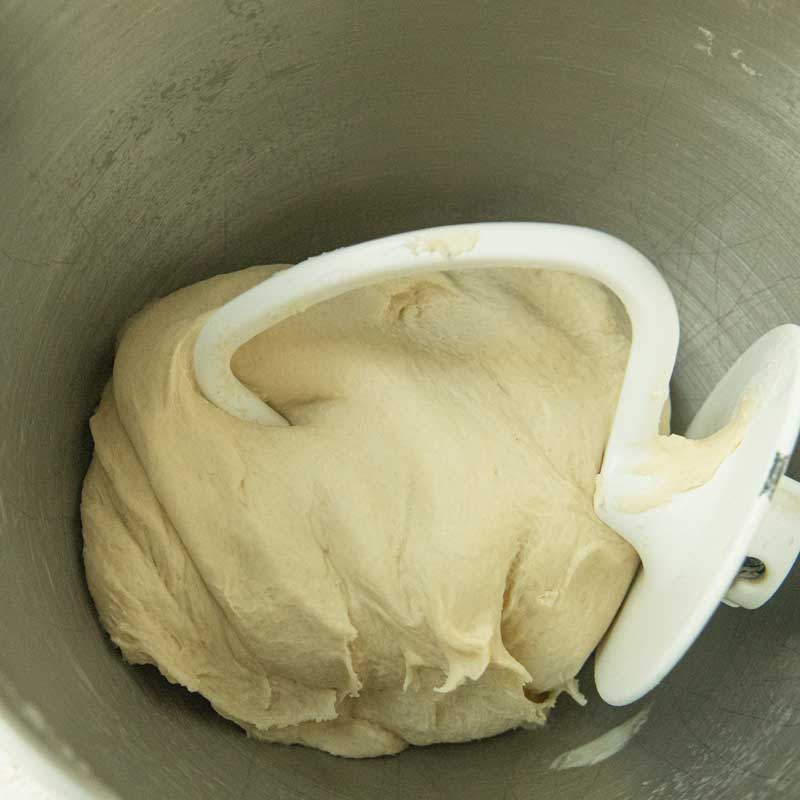
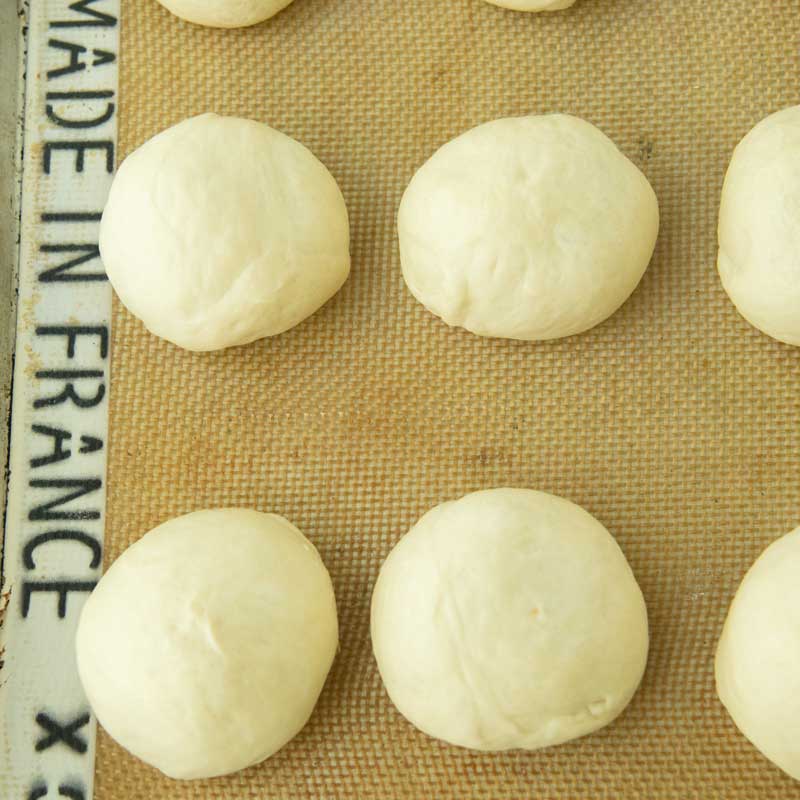
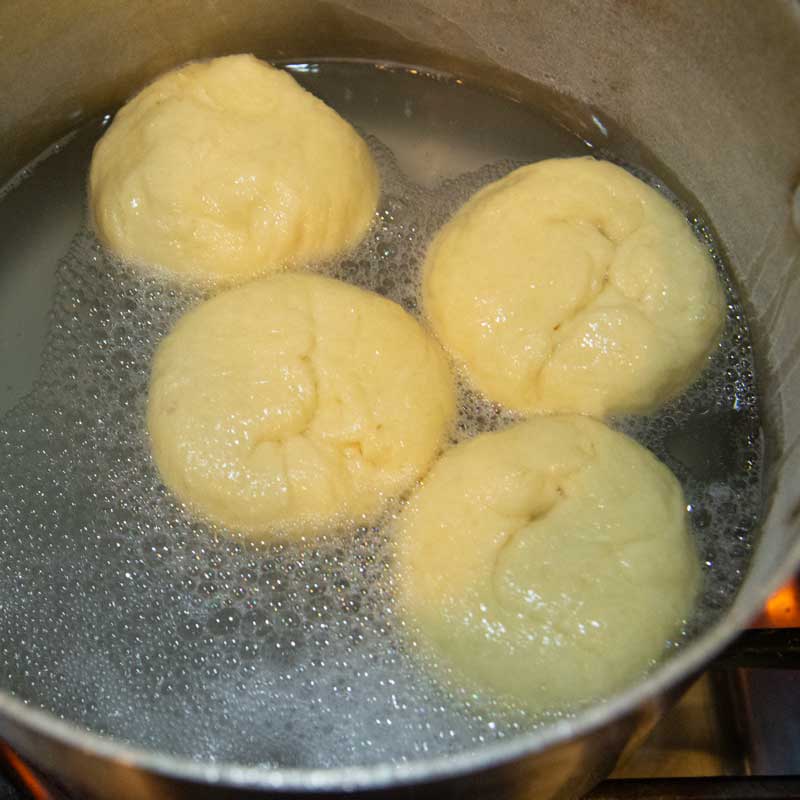
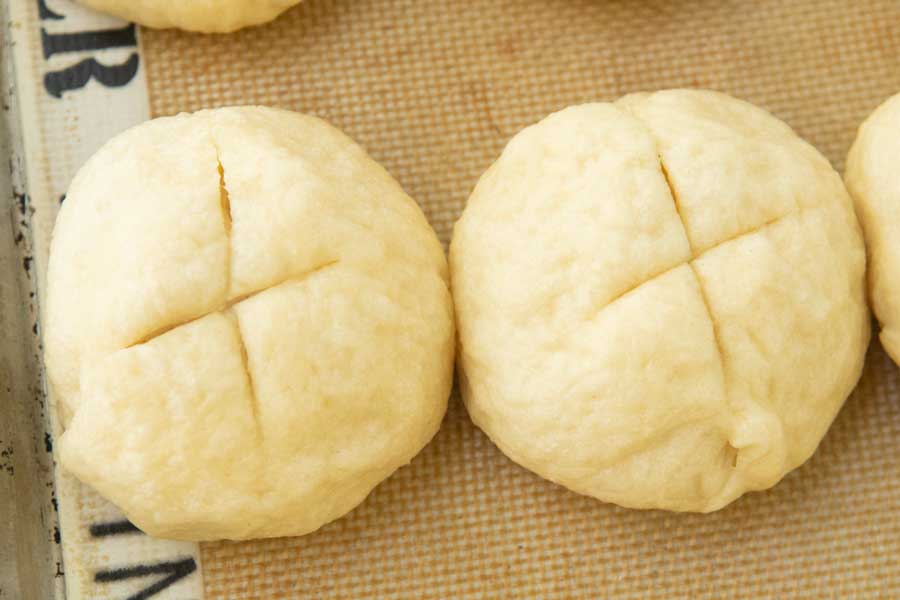
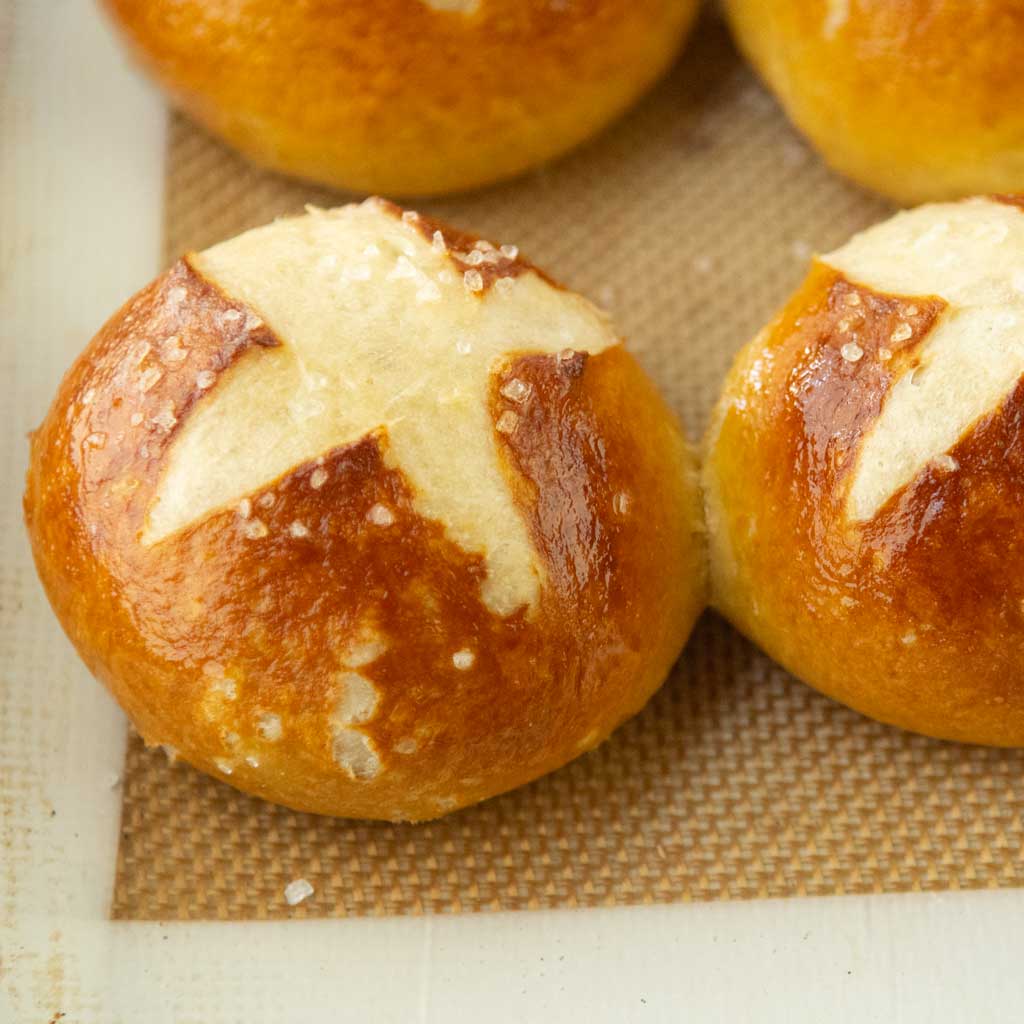
- Make the Dough: Dissolve the yeast in the warm water in a mixing bowl. Next, pour in the flour, then the salt, and lard. If you’re using a stand mixer, stir everything together with the dough hook briefly to make a rough dough, and then knead the dough on low speed until it is elastic and forms a ball around the hook–about 2-3 minutes. If you’re mixing by hand, next stir all the ingredients together with a spoon to form a rough dough. From there, turn out the dough onto a work surface and knead the dough until it is smooth–about 5 minutes. Cover the dough to rest and rise for 1 hour.
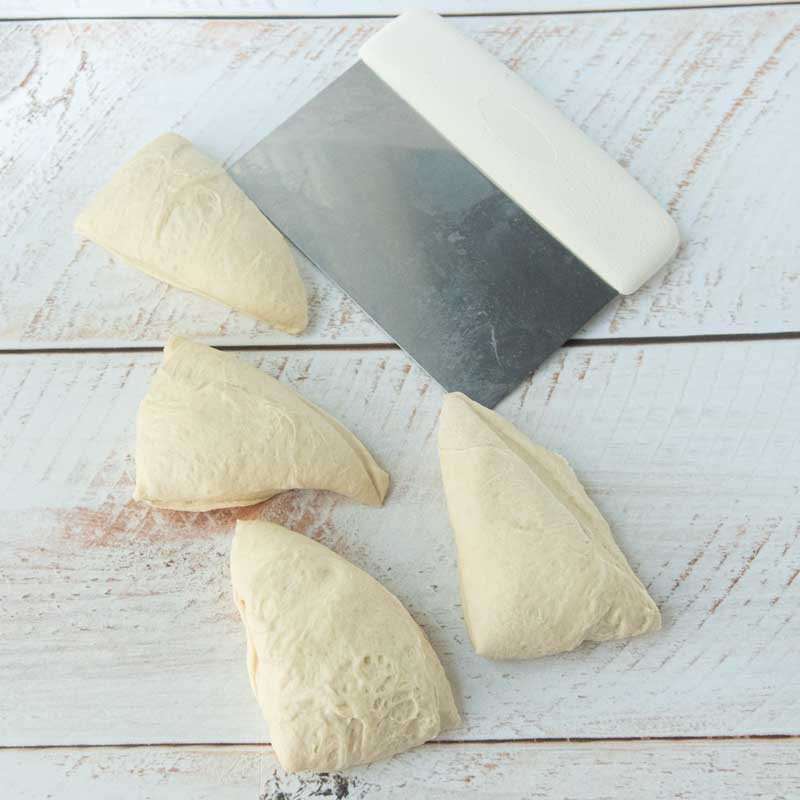
- Make the Dough Balls: Turn out the dough onto a work surface and divide it into 16 pieces. Make a dome with your hand and rotate each piece of dough inside your hand a few times to create a round bun. Set the buns on a sheet pan lined with a silicone mat in a 4×4 grid. Cover the pretzels to rest in the fridge uncovered for 30 minutes.
- Preheat the Oven: Just before the 30 minutes are up, preheat the oven to 425 F (220 C).
- Boil the Pretzel Buns: Boil the water for the baking soda solution in a large skillet or a 4 qt pot. Add in the baking soda, whisking until the baking soda dissolves. Reduce the heat to a simmer. Have a clean kitchen towel right next to the stove, and your baking sheet with the silicone mat next to that. Carefully lower 3 or 4 buns into the water, boiling them for about 20 seconds on each side. Use a slotted spoon to remove the buns, placing them bottom side down on the kitchen towel. Place the boiled buns back on the baking sheet. Repeat for the rest of the buns.
- Bake: Just before baking, make 2 cuts in the top of each bun to make an X with a sharp knife. Bake the pretzel buns for 12-15 minutes, rotating the pans halfway through baking. The pretzel buns should be deep golden brown and the surface will bounce back when you touch them.
- Brush with Butter: Immediately after baking, brush the soft butter onto the pretzels. The butter will keep the crust soft and give it even better flavor.
How to Freeze Pretzel Buns for Parties
- Place cooled buns (unsliced) in freezer ziploc bags. Remove as much air as possible and then seal the bags.
- Freeze for up to 3 months.
- Thaw frozen rolls on the counter for a couple hours and then warm them back up in a 300 F oven for 5-10 minutes in a foil package to preserve moisture. Slice the warmed buns and use any way you’d like.
What to Serve with Pretzel Buns
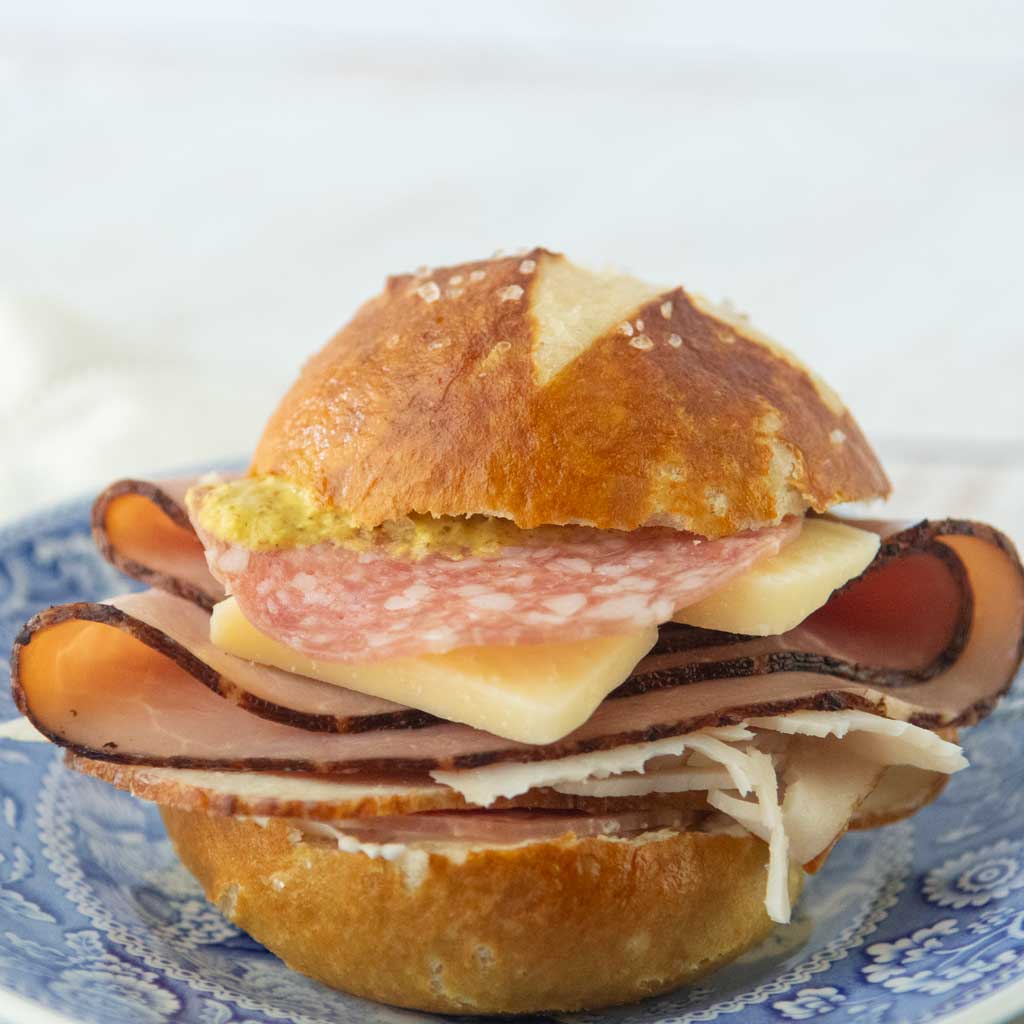
- Butter!!!: These buns are so very very good plain with plenty of soft butter.
- Cheese and Meats: These are natural sandwich buns, right up there with my favorite Deli Rye Pan Buns for ultimate party sandwich breads. The chewy outside and salty tops make them naturals for all flavors savory.
- Sliders: These buns would be great with slider burgers and they’re lovely with pulled pork and pickles.
- Mustard: Do not skip mustard when you make sandwiches with these buns; the mustard makes these buns do cartwheels.
Easy Pretzel Buns: Laugenbrötchen
Ingredients
Pretzel Bun Dough
- 1 and 1/4 cups warm water (295 mL)
- 2 teaspoons instant yeast or active dry
- 1 Tablespoon granulated sugar
- 3 and 1/2 cups all-purpose flour (455 g)
- 1 teaspoon salt
Baking Soda Solution
- 1 cup water
- 2 tablespoons baking soda
Finishing the Pretzels
- 1 teaspoon pretzel salt , kosher salt, or other coarse salt
- 1 Tablespoon soft butter